


The enterprise training landscape is undergoing a fundamental shift. For decades, workforce development relied on instructor-led sessions, slide decks, PDFs, and later, static eLearning modules. Even early digital transformations largely replicated passive consumption models in new formats.
But passive learning is no longer sufficient for high-risk, high-complexity industries—especially energy.
Interactive and immersive training environments are emerging as the new standard because they demand participation, decision-making, and applied understanding. In sectors where safety, compliance, and operational precision are critical, learning must move beyond information delivery to experience-based capability building.
Research from the Industrial XR Forum shows that training is the primary objective of immersive technology adoption across industrial sectors . Meanwhile, the VR/AR Association highlights the effectiveness of immersive methodologies in complex energy environments .
The future of training is not about better slides. It is about intelligent, interactive simulations that replicate real-world decision-making.
The Problem With Passive Learning

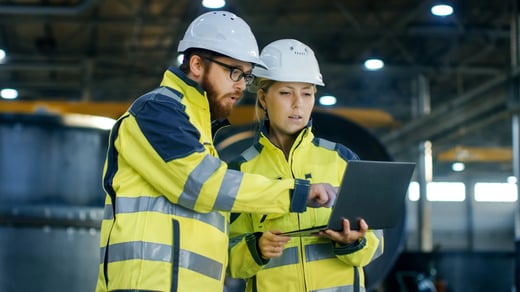
Passive learning assumes that exposure equals understanding.
Traditional training formats often rely on:
- Slide-based presentations
- Static videos
- Text-heavy compliance modules
- Knowledge checks disconnected from real scenarios
While these formats are scalable and cost-effective, they frequently fail to build practical competence—especially in industries where spatial awareness, hazard recognition, and procedural sequencing are essential.
In high-consequence sectors like oil & gas, utilities, renewables, and nuclear, the gap between theoretical knowledge and operational readiness can have serious consequences.
Passive learning informs.
Interactive learning prepares.
Why Interactive Training Works Better in Energy
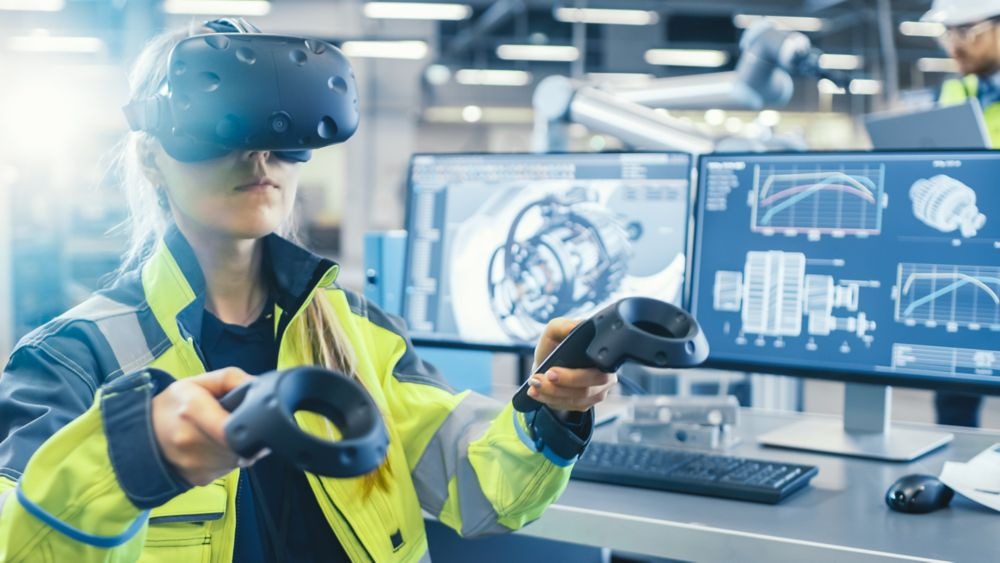
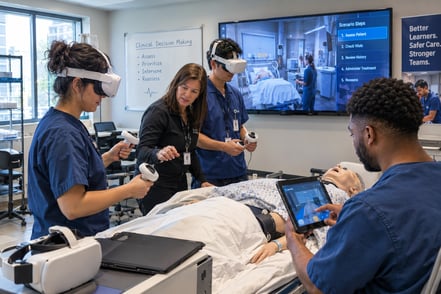
Interactive training is built around participation. Instead of consuming information, learners must engage with environments, make decisions, and experience consequences.
The VR/AR Association emphasizes that immersive environments improve understanding of complex systems and enable safe rehearsal of dangerous scenarios . Meanwhile, industrial XR research confirms safety training and equipment operation as top-value use cases .
Interactive training works better because it aligns with how operational skills are actually developed.
It delivers:
- Contextual learning inside realistic environments
- Procedural practice rather than memorization
- Spatial understanding of complex systems
- Scenario-based decision-making
- Immediate feedback on performance
In energy operations, where workers must diagnose faults, follow strict procedures, and respond to unexpected conditions, this difference is profound.
From Content Consumption to Skill Simulation
Passive training is content-focused. Interactive training is capability-focused.
Instead of asking, “Did the learner read the material?” interactive models ask, “Can the learner perform the task?”
This shift has significant implications for energy enterprises.
Interactive simulations allow learners to:
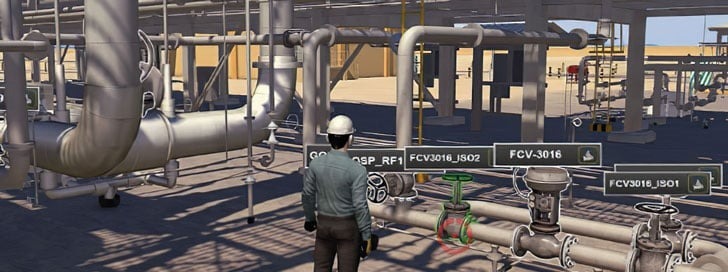
- Walk through substations or refinery units virtually
- Identify hazards in 360° site environments
- Execute lockout/tagout procedures step-by-step
- Practice emergency response scenarios
- Navigate complex systems before entering them physically
This builds confidence and competence before real-world exposure.
The Role of AI in Accelerating Interactive Training
As interactive learning becomes the new standard, Artificial Intelligence (AI) is emerging as the accelerant.
AI does not replace immersive platforms—it enhances them.
AI can:
- Convert standard operating procedures into interactive scenarios
- Auto-generate branching pathways
- Personalize simulation difficulty
- Provide adaptive remediation
- Analyze learner performance patterns
This evolution moves training from static modules to intelligent simulations.
Instead of the same experience for every learner, AI-powered interactive training can:
- Increase complexity for experienced operators
- Offer guided assistance for new hires
- Introduce dynamic scenario variables
- Identify competency gaps automatically
In energy environments, where workforce skill levels vary widely and risk tolerance is low, this adaptive capability is transformative.
Why This Shift Matters Now
The energy sector is experiencing:
- Workforce retirement and rapid onboarding demands
- Grid modernization and renewable expansion
- Tightening compliance frameworks
- Increased safety scrutiny
Training must evolve alongside operations.
Interactive training supports:
- Faster onboarding without compromising safety
- Standardized training across distributed sites
- Reduced downtime during skill development
- Measurable competency validation
When combined with AI-assisted development and analytics, interactive learning becomes not just engaging—but strategic.
The Business Case for Interactive Training
Energy leaders are not interested in technology for technology’s sake. They care about outcomes.
Interactive training supports measurable business goals:
- Reduced incident rates
- Improved first-time task success
- Lower training travel costs
- Increased retention of procedural knowledge
- Enhanced compliance documentation
Industrial XR data shows enterprises invest in immersive programs primarily for safety, efficiency gains, and cost savings .
Interactive training aligns directly with those priorities.
Interactive ≠ Headset-Only
It is important to clarify that interactive training is not limited to head-mounted displays.
Interactive environments can be delivered through:
- Desktop-based simulations
- 360° interactive site walkthroughs
- Hybrid immersive platforms
- Blended learning ecosystems
The future is not defined by hardware—it is defined by engagement and intelligence.
FAQ
What is the difference between passive and interactive training?
Passive training involves consuming information (videos, slides, PDFs). Interactive training requires learners to make decisions, engage with scenarios, and apply procedures.
Why is interactive training more effective in the energy sector?
Because energy operations require applied skills, spatial awareness, and decision-making under pressure—capabilities that passive formats struggle to build .
Is interactive training the same as VR training?
Not necessarily. Interactive training includes VR, but also desktop simulations, 360° interactive environments, and blended digital experiences.
How does AI enhance interactive training?
AI enables adaptive learning, automates scenario creation, personalizes difficulty, and provides performance analytics.
Does interactive training improve ROI?
Yes. Industrial research shows organizations adopt immersive and interactive training primarily for safety improvements, efficiency gains, and cost savings.

Comments